Dermal Fillers | Milton Keynes
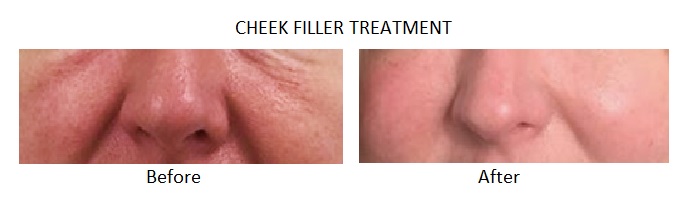
As we age our skin loses collagen and fat, causing it to sag and wrinkle. Dermal fillers replace this lost volume by adding structural support to sagging skin, lifting the skin and giving a youthful look.
What causes volume loss?
- Volume is lost through the loss of bone density, shrinkage and shifting of fat pads, loosening of ligaments and hormonal changes. These factors cause the skin to sag, creating hollows in the cheeks and under the eyes, resulting in a less youthful appearance.
- Loss of facial volume results from various extrinsic and intrinsic factors. Intrinsic ageing occurs due to the natural consequence of ageing, resulting in diminished collagen and elastin, and bone mass, muscle mass and the fat held directly beneath the skin.
- Extrinsic factors like sun exposure, gravity and lifestyle factors such as chronic stress, smoking and excessive alcohol consumption can also play a role.
- All these factors contribute to volume loss and loss of skin elasticity, resulting in a tired, sunken look, which can make you look older. It can also reduce your self-confidence.
What is the triangle of youth?
A youthful face has 3 unique features: high cheekbones, full cheek volume, and a well-defined jawline. These three attributes are often referred to in the aesthetics world as the “triangle of youth” with the base of the triangle being at the cheeks and the point at the chin. As we age, this youthful triangle often becomes inverted. The face becomes more oblong, cheeks flatten and jowls appear due to decreased facial fat and the normal degenerative changes.
What are dermal fillers?
The most common type of dermal filler is made of a gel like substance called hyaluronic acid. Hyaluronic acid is also naturally found in the body, however, the levels naturally decline with age, dropping by roughly 2% annually and reducing by half by the age of 50.
How do dermal fillers work?
Dermal fillers hold on to water, which keeps the skin hydrated and plump. The results are usually visible immediately after the treatment.
What is dermal filler used for?
Here at MKSkin clinic, Milton Keynes, we offer a variety of dermal fillers to revolumize and support areas of fat loss. The revolumizing & contouring technique requires dermal fillers to be injected into strategic anatomical landmarks of the face to replace the lost volume and provide additional support to the facial tissue, minimizing the effects of facial ageing for a rejuvenated, youthful look.
At MKSkin clinic, Milton Keynes, we use dermal fillers for cheek augmentation and contouring, chin, jawline, jowls, nose to mouth lines, downturned mouth lines. We also use dermal fillers for tear trough treatment, lip augmentation and nose augmentation.
Will I get natural looking results?
We understand that dermal filler is all about injecting the right volume in the right place to enhance facial aesthetics. Too much dermal filler in the cheeks can give a hamster-like look and make the eyes look smaller. We work with your natural features.
The idea behind this treatment is to replace the volume that has been lost with time to achieve a rejuvenated appearance and enhance your natural beauty without appearing overdone. Patient comfort, safety and effective treatments remain our first priority.
What does the treatment involve?
You will have consultation with the doctor, so that we can understand your treatment expectations, take your medical history and explain what your treatment will involve. A treatment plan will be made to set out how we can use dermal fillers to achieve the desired results. The dermal fillers we use contains a local anaesthetic that makes the injection comfortable. Cold packs are also used for added comfort. The area to be injected is marked out. The treatment area is thoroughly cleansed and dermal fillers are injected. The procedure takes between 30-60 minutes, depending on the size of the area to be treated.
What to avoid after dermal filler treatment?
Avoid touching or rubbing the treated area to prevent infection and filler migration. Avoid applying makeup, creams or serums for at least 12-24 hours after treatment. Avoid saunas, hot tubs, steam rooms and alcohol for 24 hours.